My job is to help the team do its best work.
The operating system
Three disciplines, three artifacts.
Design, product, and the business each pull in a different direction. The artifacts are how they agree. Jobs to Be Done is where design and product decide what to build. The skill matrix is where design proves its growth to the business. Unit economics is where product earns its budget. The function I install sits at the center and keeps the three honest.
System
The operating principle
The team keeps moving without me in the room.
What a design function looks like when it holds
What I believe
My job is to build the conditions where design decisions get made well: clear direction from the top, real protection from organizational noise, a critique ritual that holds the bar honestly, and artifacts the team can run on after I leave.
I lead by building the operating system, not just the team. The ladder, the hiring loop, the critique cadence, the JTBD frame, the readiness bar. A hiring manager inherits those when they hire a leader at this level. They are the work.
Track record
The pattern across five companies and three current ventures is the same. The function is stronger when I leave than when I joined, and the artifacts that made it stronger stay behind. Since Axios HQ, AI has written code, drafted copy, run audits, and caught regressions on every project I ship.
- Three ventures, all currently shipping, AI in the production loop on each. Nibbble.io in production with an unattended local-model autofix loop. Kintsu Medspa with a governed AI workflow that designs the product, writes the marketing, and audits the growth, against a bar committed once. Simple Cortex running as a three-agent company with cost as a tool surface. (2025 to present)
- Re-architected the Axios HQ product in 90 days. Doubled AI usage across the platform. The real problem was not navigation. The product had outgrown its original shape and every new feature was fighting for room. I led the multidisciplinary product organization through the rebuild and shaped AI strategy with the CMO and Head of AI. (Axios HQ, 2023 to 2025)
- Built the Sitetracker design discipline from scratch. Skill matrix, spec-free hiring loop, career ladder, mentorship model, critique culture, and a global capability in India that ran without me in the room. The team had good people. It did not yet have the conditions for design to shape product decisions. (Sitetracker, 2021 to 2023)
- Co-founded Samsung Ads. $20M in profit in year one. A small team with a large company's surface area. I was the first UX designer on the unit and led design as it grew into a business. (Samsung Ads, 2013 to 2015)
- SalesforceIQ Contact Gallery: +40% DAU, +34% duplicates merged. Shipped against a live CRM with measurable lift. The early AI UX work on confidence, source transparency, and correction loops fed forward into Salesforce Einstein. (SalesforceIQ, 2015 to 2017)
- Cut Microsoft global partner onboarding time by over 60%. Early proof that systems thinking pays at platform scale. (Microsoft, 2012 to 2013)
How I build a design function
Six artifacts. I install them when I take a function from zero, or when I rebuild one that has drifted. The first five have held their shape across three companies. The sixth is new in the last two years and is already load-bearing.
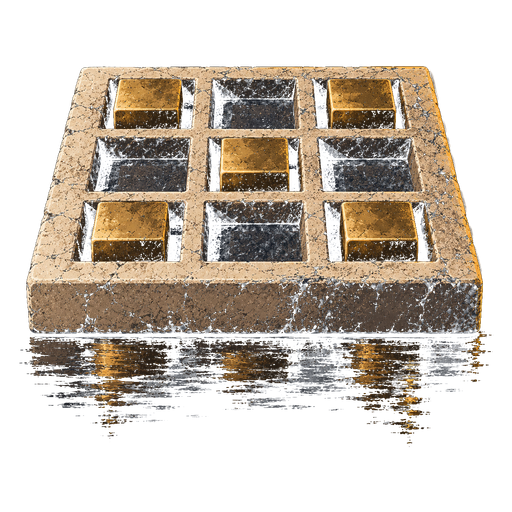



Skill matrix. Capabilities mapped across a small set of named dimensions. Gaps tracked openly. Hiring, promotion, and coaching all reference the same matrix, so growth conversations are not reinvented per person. AI fluency lives on the matrix as its own dimension. Not a bonus.
Spec-free, skill-based hiring loop. I do not hire from a job description. I hire against the matrix and the gap. Roles are scoped from the team's actual capability shape, not a generic ladder cell. The interview asks what the person will do in their first ninety days, not which credentials they hold.
Career ladder. Levels and expectations written down, visible to the team, referenced in every career conversation. The ladder is a contract. It tells a designer what next looks like and what evidence proves it.
Critique culture. Critique is a standing practice, not a vibe. Designers present problem context before they show the design. Notes tie back to a user need or a business goal, not aesthetics. A safe team is not a comfortable team. It is a team willing to challenge the work. The bar is consistent across shipped work, prototypes, reviews in progress, and anything an AI helped produce.
Jobs to Be Done as the organizing primitive. Roadmaps, research, packaging, and design briefs anchor to the job, not the feature list. At Sitetracker, JTBD became the shared vocabulary across product, engineering, and design. It outlasted my tenure.
AI contribution contracts. Every shipping repo carries CLAUDE.md, AGENTS.md, and where brand voice matters, AI_DESIGN_GUIDELINES.md. AI contributors get a contract, not a vibe. Prohibited words, motion easing, color tokens, compliance rules. All of it is enforced at the contract stage, before a model writes a line. The same readiness bar holds whether a human or a model proposes the work.
Operating rituals at a glance
The cadence that keeps the function aligned.
The shape, not the schedule. Same rituals across Sitetracker, Axios HQ, and Samsung Ads, adapted to scope and team maturity. Detail below.
One-on-ones
Designer-driven agenda. Career arc, hard work, what to push back on. Ladder referenced every six weeks.
Critique
Context first, design second. Notes tied to a user need or business goal. AI-assisted output critiqued at the same bar.
Design and product sync
Once for sequencing, once for the work. Design enters at problem framing, not handoff.
Portfolio review
Three slides per designer: shipped, in flight, next. The receipt the leadership team gets at budget time.
Quality bar, written down
Brand voice, accessibility, performance budgets, evidence of testing, AI contribution contract. Team co-authored, team enforced.
- Weekly // 30 min
One-on-ones
Designer-driven agenda. Career arc, hard work, what to push back on. Ladder referenced every six weeks.
- Weekly // 90 min
Critique
Context first, design second. Notes tied to a user need or business goal. AI-assisted output critiqued at the same bar.
- Twice weekly
Design and product sync
Once for sequencing, once for the work. Design enters at problem framing, not handoff.
- Quarterly
Portfolio review
Three slides per designer: shipped, in flight, next. The receipt the leadership team gets at budget time.
- Standing
Quality bar, written down
Brand voice, accessibility, performance budgets, evidence of testing, AI contribution contract. Team co-authored, team enforced.
Operating rituals
One-on-ones keep status out of the conversation. Status lives in the doc and the standup. This time belongs to the designer's career arc, the work that is hard, and what they want pushed back on. The ladder enters every sixth week so growth is never abstract.
Critique is the readiness mechanism. Work that survives critique is work ready to ship. Written prep is expected before anyone opens a file: the problem, the constraints, the open questions. Notes tie to a user need or a business goal, not aesthetics. AI-assisted output is held to the same bar.
Design and product sync puts design at problem framing, not handoff. At director scope, the question is whether the work answers the right Job to Be Done and whether the team has earned the next decision without me in the room.
Quarterly portfolio review is the receipt the leadership team gets when budget conversations come around. Three slides per designer. The artifact lives in a shared doc so the whole team can read each other's arc.
Quality bar, written down. Readiness is not a feeling. It is a checklist the team co-authored and enforces on each other. Brand voice, accessibility, performance budgets, evidence of testing, and the AI contribution contract are all line items.
When the framework leaves the design org
At Sitetracker, the first move was not a workshop. It was a set of conversations with the Head of Product and engineering leadership about what was making product decisions slow. The answer, consistently, was that product, design, and engineering were starting from different assumptions about the customer. They held different mental models of what the customer was trying to accomplish, even when they looked at the same data.
Jobs to Be Done entered the room as a shared frame, not a design deliverable. Over several months, it became the organizing logic for how product conversations started: with the job, not the feature. The Head of Product embedded it in the PDLC playbook. Engineering leads started asking "whose job is this solving?" in sprint reviews.
The design team did not own JTBD. The org did. That is the part that mattered. The framework outlasted my tenure because it was never positioned as a design methodology in the first place.
The twelve-month bar
I measure leadership by what people become, not just what they ship. The coaching is concrete: clearer writing, sharper presentation under pressure, the ability to run their own critique, the confidence to own a career conversation, and the judgment to use AI as a thinking partner without dropping the bar on their own craft. The artifacts make the growth legible. The coaching makes it real. The pattern I look for is a designer who, twelve months in, no longer needs me to translate the business context for them. That is the proof.
The designers I have managed and the partners I have worked with across product and engineering describe the practice more directly than I can.
"What sets Mohsin apart as a mentor and leader is his ability to teach a team the necessary skills to solve complex problems instead of being prescriptive with a solution. This not only contributes to the delivery of a high quality product, but it grows the skillset of each member of the team."
"Mohsin brings the much-desired balance of both theory and practice, stemming from many years of hands-on experience. Couple that with his strong empathy, deep caring, and absolute passion for design and it is no wonder Mohsin is able to attract, build, and grow top-notch design teams."
"Of his many talents, the thing I appreciated most about working with Mohsin was his ability to give constructive criticism in a motivating way. With Mohsin, everything boils down to better serving the customer, which reduces politics and infuses focus and purpose to every project."
One-on-ones
Designer-driven agenda. Career arc, hard work, what to push back on. Ladder referenced every six weeks.
Critique
Context first, design second. Notes tied to a user need or business goal. AI-assisted output critiqued at the same bar.
Design and product sync
Once for sequencing, once for the work. Design enters at problem framing, not handoff.
Portfolio review
Three slides per designer: shipped, in flight, next. The receipt the leadership team gets at budget time.
Quality bar, written down
Brand voice, accessibility, performance budgets, evidence of testing, AI contribution contract. Team co-authored, team enforced.
- Weekly // 30 min
One-on-ones
Designer-driven agenda. Career arc, hard work, what to push back on. Ladder referenced every six weeks.
- Weekly // 90 min
Critique
Context first, design second. Notes tied to a user need or business goal. AI-assisted output critiqued at the same bar.
- Twice weekly
Design and product sync
Once for sequencing, once for the work. Design enters at problem framing, not handoff.
- Quarterly
Portfolio review
Three slides per designer: shipped, in flight, next. The receipt the leadership team gets at budget time.
- Standing
Quality bar, written down
Brand voice, accessibility, performance budgets, evidence of testing, AI contribution contract. Team co-authored, team enforced.
THE WEEK, AS ACTUALLY RUN
Three threads to pull next.
Case studies
The operating system, in the wild.
Axios HQ, Sitetracker, Samsung Ads, and what I am shipping now. Platform work, discipline-building, zero-to-one.
Writing
The thinking under the practice.
Notes on leading a team and hiring for potential. More on the way.
Contact
Open to leadership and advising.
Director, Sr. Director, VP, and Head of Design. Advising and fractional work when the brief is specific.