

TL;DR
I helped start Samsung Ads and ran design across it. Mine: the interaction work, the front-end engineering, and the data-visualization layer buyers read. Data science owned the signal models underneath; I partnered with them on what to surface. The proof: a tiny team became a standing Samsung business unit that turned a profit in year one, and the way I turned aggregated viewership into readable patterns became a filed patent.
Building an ad category that did not exist yet
The real problem was creating a new business inside a large company. You design product surfaces, but also trust with executives, workflows with data science, standards with partners, and enough operating structure for a small team to survive inside a much larger organism.
Samsung had the hardware footprint and first-party smart TV data at a scale no independent network could match, and no ad business to monetize any of it. The question was not whether smart TV advertising could be a business. It was whether a new team could move fast enough inside Samsung to prove the category before the window closed. Small team, big ambition, high ambiguity. We sat close to product and engineering because that was the only way to move fast enough. It worked: the category held, and the small team became a standing Samsung business unit.
Startup inside an enterprise
Samsung Ads
Four-person founding team
Hired as one of four to build the division from zero.
Advertiser platform
Built the self-serve ad platform and an early design system.
IAB ad standards
Set smart-TV ad standards with the IAB.
Samsung business unit
Scaled the team and product into a full Samsung division.
$20M profit in year one
The venture turned profitable in its first full year.
What I did
- Co-founded what became Samsung Ads as one of four founding members. Charged with building the design and front-end side: the advertiser platform, the data visualization layer, the standards posture with IAB, and the team behind all three.
- Led design and front-end engineering for the early platform. Held a quality bar that matched advertiser trust expectations from day one rather than deferring polish to a later phase.
- Contributed to IAB working groups on smart TV and large-display advertising standards rather than waiting for external rules to land. That gave Samsung Ads early influence over the category and produced tighter design constraints for the platform.
- Mentored product managers, supervised a satellite team, and briefly served as general manager during the scaling phase.
- Aligned product, platform, and design standards across US and Korea collaboration throughout the build.
The key discovery: buyers act on patterns, not raw signal. The first cut of the dashboard surfaced every viewing signal Samsung's TVs produced. Advertisers froze. More data did not read as more insight; it read as noise, and a buyer who cannot decide does not buy. Working with data science, I found that buyers acted on a small set of recurring viewing patterns, not the full firehose. So I designed the platform to surface those patterns and hide the rest. That framing, turning aggregated viewership into readable patterns, became the patent I filed.
Operator platform · Business Dashboard
3 points
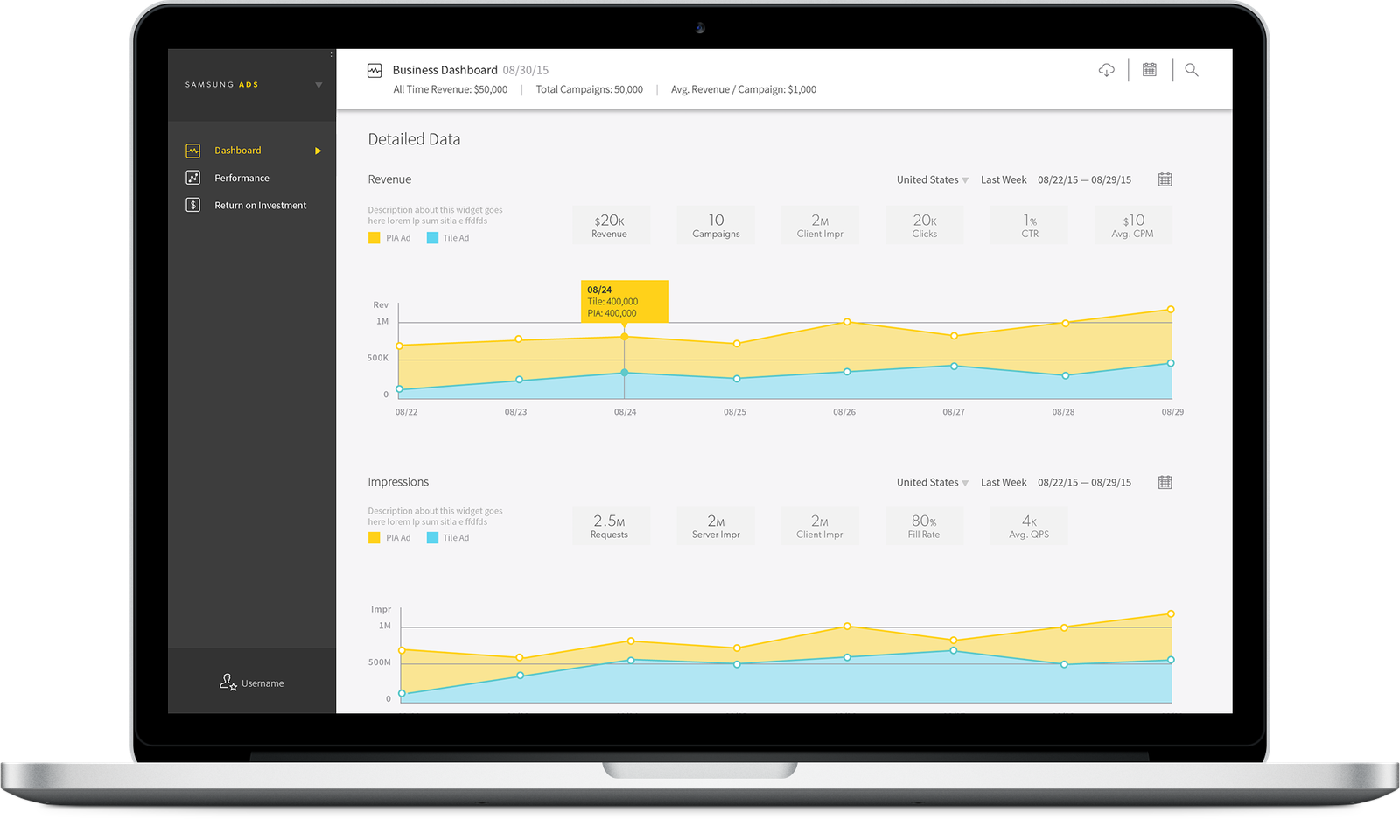
The KPI tiles read the same way on every view, so a media buyer learns the system once and never re-learns it.
The platform
Samsung Ads
IAB ad standards
Samsung Ads platform
Samsung TVs
Entry point. Viewing happens here.
Viewership signals
What audiences watch, when, and how long.
Data science
Patterns, segments, and predictive models.
Advertiser insight
Audience intelligence ready to act on.
Advertiser tools
Self-serve platform for planning and buying.
What I authored to lead the function
Design org artifacts, 2014.
- 01 / 02Design principles
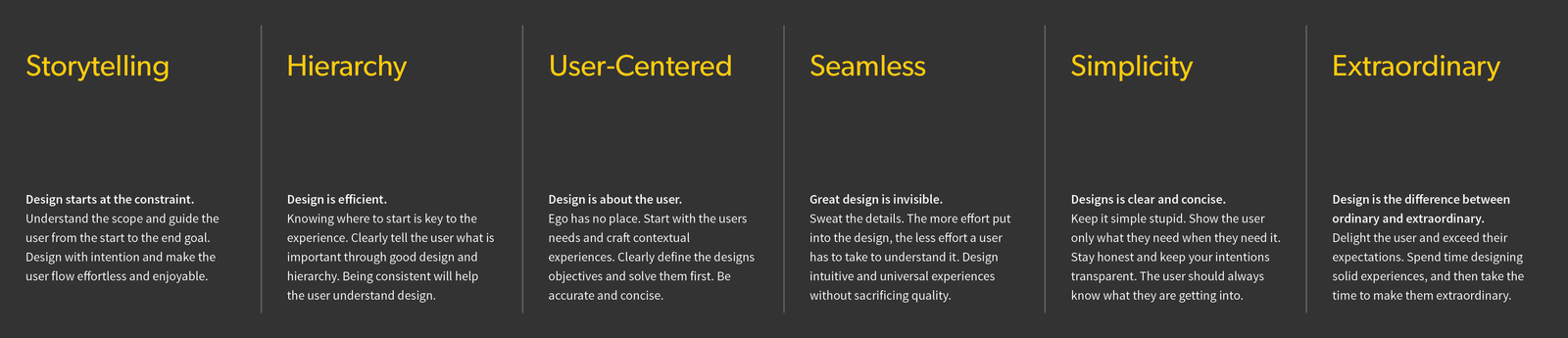
Written for a four-person founding team that needed to critique each other's work without an executive arbitrating every call. Storytelling, hierarchy, user-centered, simplicity, and restraint. Every contractor who joined after held the same bar. - 02 / 02Design process
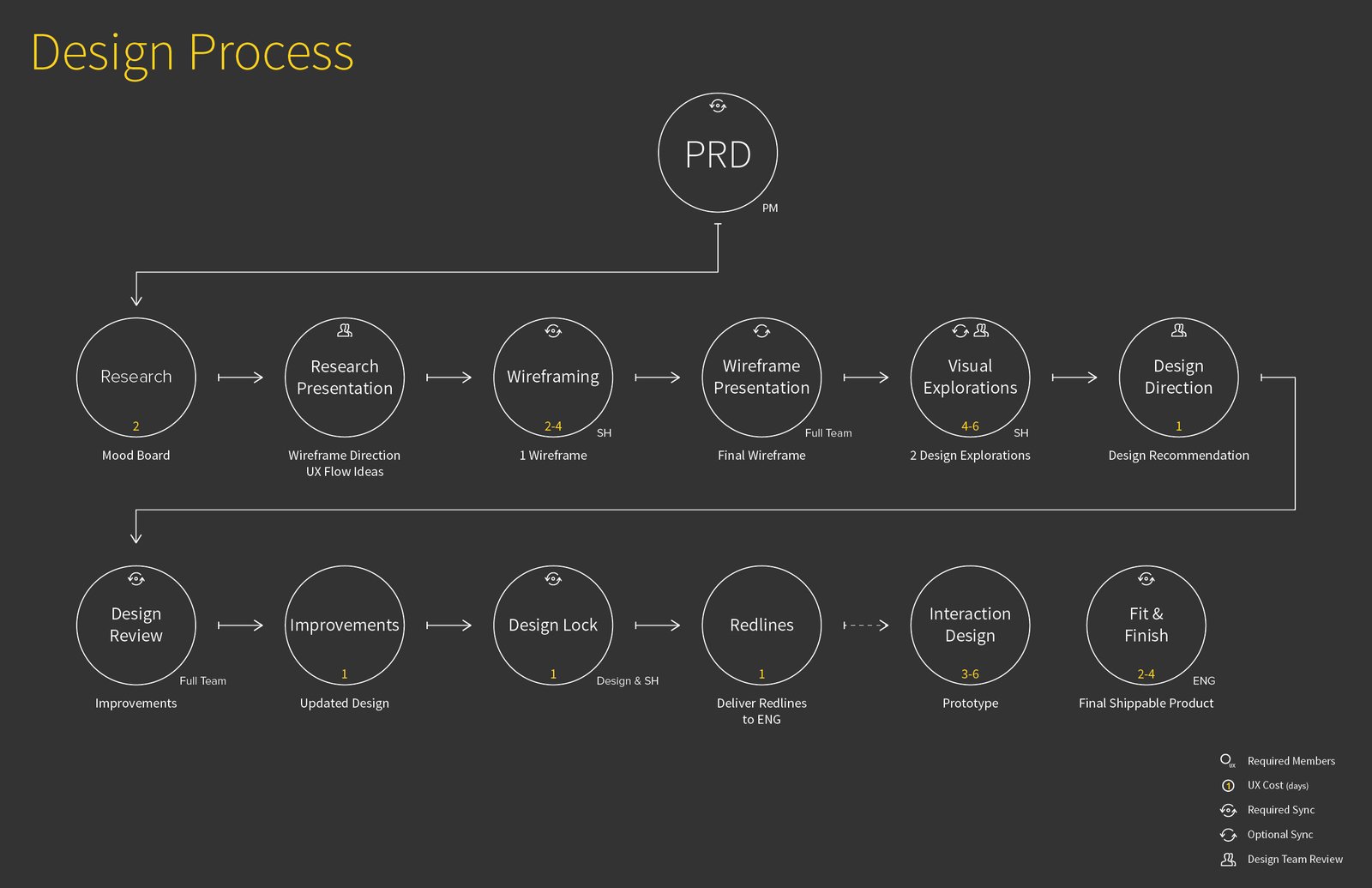
The first design-process diagram authored at Samsung Ads. Required headcount and sync points named at each step, because a startup inside a large company will skip them if you let it.
Outcomes
A founding experiment became a standing business. The team went from four founders to a Samsung business unit, the pattern-first platform shipped as the advertiser daily driver, and the viewership-to-patterns approach became a filed patent. The design language I set for it carried into the broader Samsung TV experience and stayed there.
Profit, year one
Samsung Ads, 2014.
From a four-person founding team to a business unit.
Reflection
1. Speed inside a large company is never just speed. It is negotiation, alliances, and enough proof to keep the corporate antibodies away. The dashboard was as much a political instrument as a product: a small team survives by shipping something executives cannot argue with. 2. More data is not more insight. The first cut drowned advertisers in signal; the platform only worked once it surfaced the few patterns buyers actually acted on. I now reach for the smallest legible view first, not the most complete one. 3. What I would do differently: engage standards bodies earlier. We contributed to IAB working groups, but reactively, responding to agendas others set. Helping set that agenda from the start would have produced cleaner product constraints and a stronger competitive position from day one.