

TL;DR
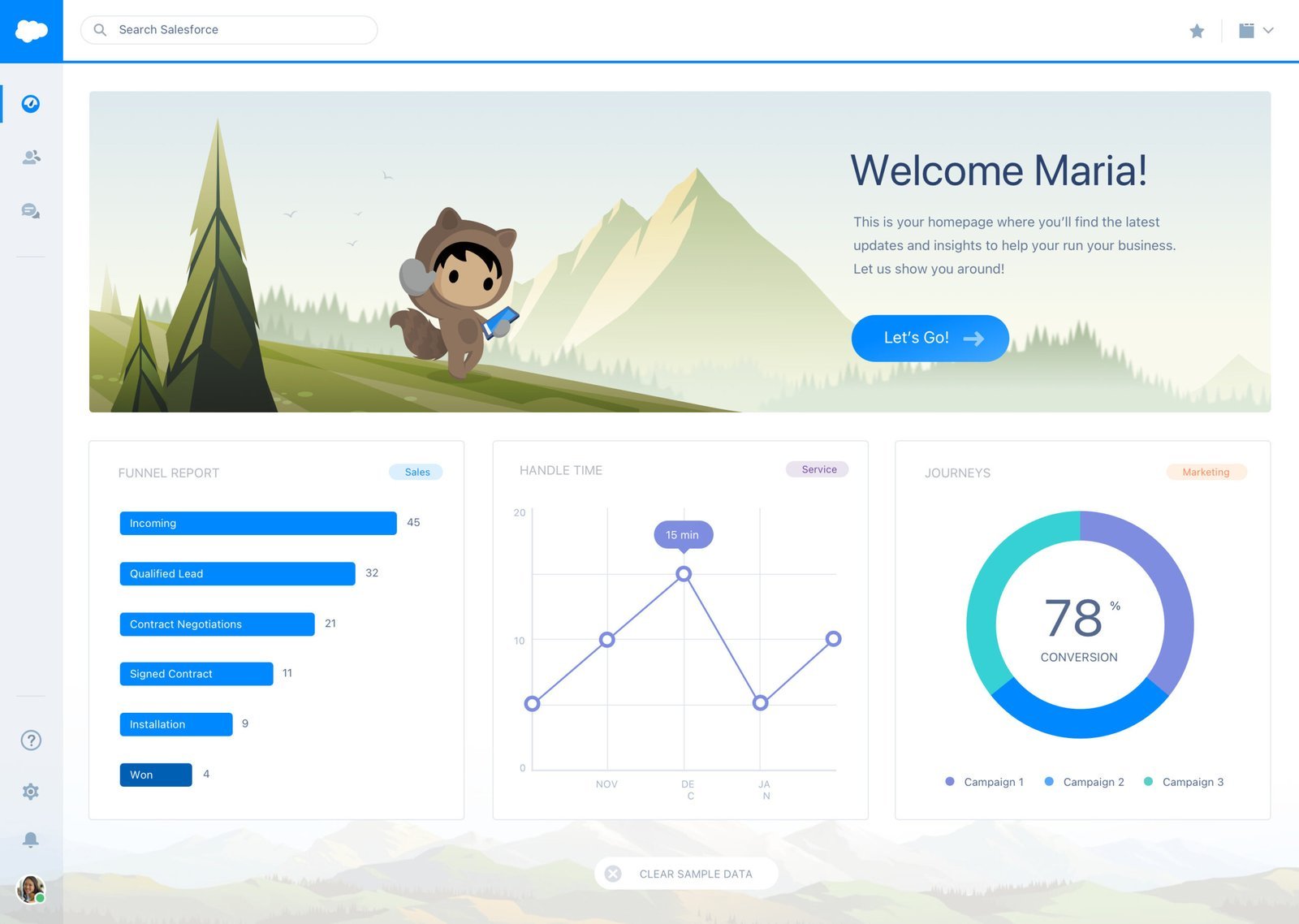
Packaging enterprise software for a five-person team is mostly deciding what to leave out. As senior product designer for SMB and Salesforce Essentials from April 2017 to June 2020, I owned the packaging: what to show, hide, automate, and how much Einstein AI a five-person team met on day one. Engineering owned buildability, research owned the SMB study base, and I co-led the cross-company learning workstream. Essentials shipped and grew into a standalone business unit.
Salesforce had deep enterprise capability, but SMB customers needed a first experience simple enough to grow into rather than bounce off. That framing is where the work started.
The problem was not simplifying Salesforce
"Make it simple" is easy to say and usually lazy. The harder question: simple for whom, at what moment, and at what cost to the user's future?
Small businesses did not need a watered-down Salesforce. They needed the right first hour: what to do, what to ignore, how to get value before becoming CRM experts. The work became a series of packaging decisions. What to ship in Essentials. What to leave out. What to explain. What to automate. Where AI could remove setup instead of adding a feature to learn.
The surface decisions mattered, but the upstream question mattered more: which Einstein capabilities actually helped a five-person team make better decisions faster? Engineering asked which ones were buildable. Design kept asking the different question.
What I did
- Designed the SMB surface to meet users earlier in their maturity curve, packaging the experience around the few jobs a five-person team needed to finish on day one instead of the full enterprise feature set.
- I drew the line on which Einstein capabilities shipped in Essentials. Data capture and email parsing went in. Predictive lead scoring stayed out. Engineering could build scoring, and it demoed well, so the pull to include it was real. I rejected it because scoring asks a five-person team to trust a black box before they trust the CRM itself. It hides its reasoning at exactly the moment a new SMB user is deciding whether the product is worth the effort. Data capture and parsing earn trust by removing setup the user can see; scoring spends trust the product has not yet earned. So the rule I held was: AI that removes work ships now, AI that asks for faith waits until the customer has a reason to give it.
- Rebuilt onboarding as a product with its own users, its own success states, and its own design problem, replacing a set of per-feature modals with one coherent adoption flow.
- Co-led the cross-company workstream to align learning experiences across the Salesforce ecosystem around that frame, moving from fragmented per-feature tutorials toward coherent cross-product flows. The Einstein line I held inside Essentials went on to shape how the company thought about AI for SMB beyond this product.
The move underneath all of it was to reduce cognitive load without reducing ambition. The product could still grow with the customer because the architecture was never capped at simple.
Selected SMB surfaces
Packaging by sequence, not by feature.
- 01 / 04Onboarding intent
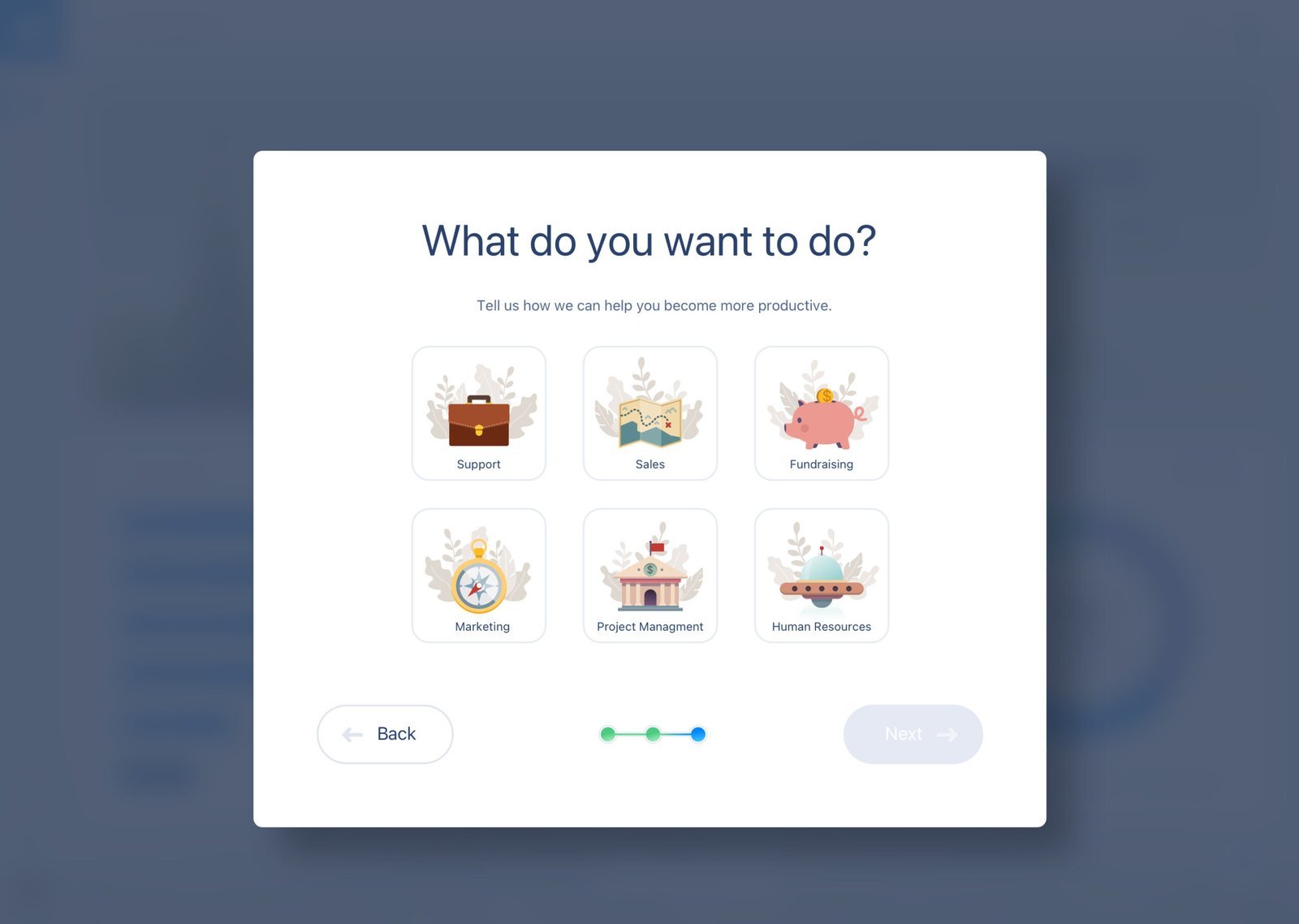
We ask what you want to do, not which features to enable. Six illustrated intents (Support, Sales, Fundraising, Marketing, Project Management, HR) replace a feature checklist, and the product reshapes around the answer. - 02 / 04Trailhead in-context
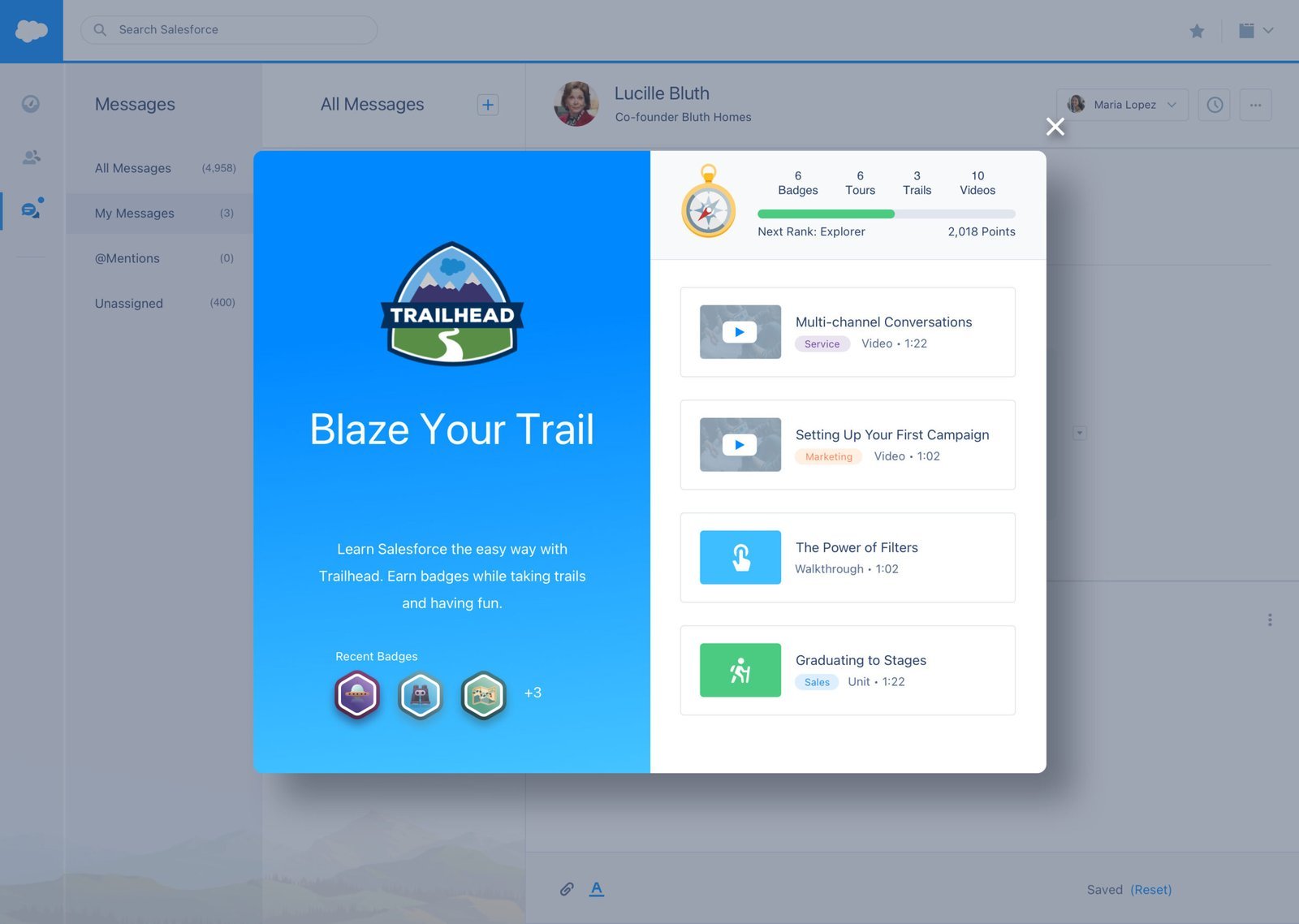
Learning lives inside the app, not next to it. Trailhead modules surface against the workflows they are about to enable. - 03 / 04Conversational tasks
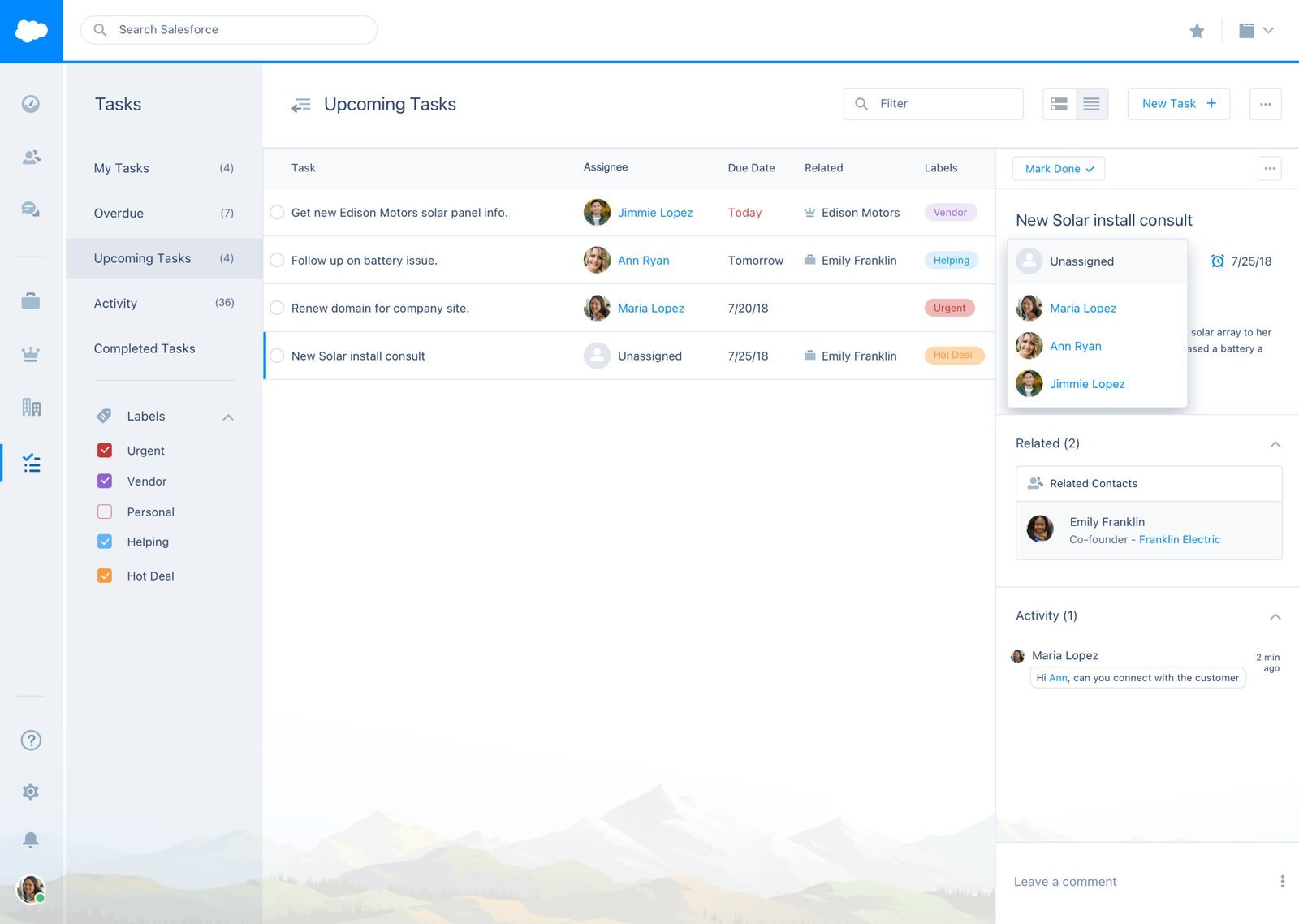
CRM primitives stay first-class and the chrome gets out of the way. Assignees and related contacts sit one tap from the task, never buried in a settings tab. - 04 / 04Omnichannel messages
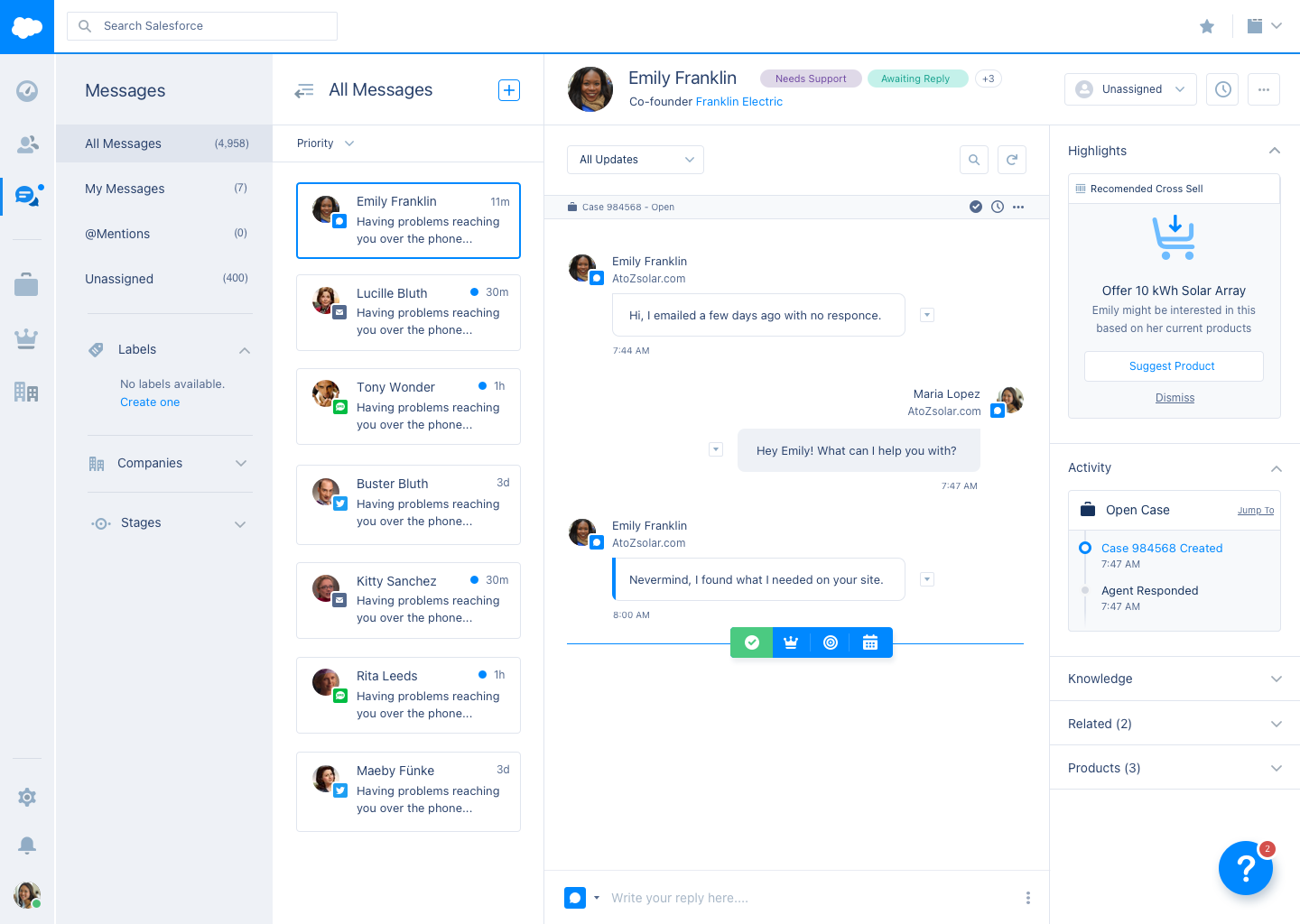
AI earns a side panel, not the driver's seat. An Einstein cross-sell sits beside the customer conversation as a suggestion the rep can take or ignore, never a forced step.
Reflection
1. Packaging is subtraction, and subtraction is the hard part. The strongest version of this work is not "I made Salesforce simpler." It is deciding how much enterprise power a small business should meet at each stage of maturity, and defending that call inside a company that wants to ship everything. Saying "this capability is real but it is not right for this user at this moment" is a harder judgment than it sounds, and it is the skill I carry into every role since. 2. What "packaged" cost us: speed. Rebuilding onboarding as a single coherent flow instead of shipping per-feature modals was the right call, but it was slower to get to first release, because a coherent flow has to agree with itself end to end while a modal only has to explain one screen. Individual teams could have shipped their own tooltips in a fraction of the time. If I ran it again I would ship a thinner first cut of the flow sooner and widen it in the open, rather than holding for coherence I could have earned incrementally. 3. Holding back predictive scoring was correct for launch, but I never closed the loop on when it should ship. I set the gate ("wait until the customer has a reason to trust it") without defining the signal that would open it. A cleaner version of the decision names the trigger, not just the veto.