

The short version
Sr. Director of Product and Design at Axios HQ, leading an eight-person org across information architecture, product design, research, analytics, and AI product strategy. The proof: AI usage doubled across the platform. I rebuilt the foundation in the first 90 days, matured product, design, research, and analytics into one organization, and set the AI strategy with the CMO and Head of AI while engineering owned delivery.
The product had lost a shape anyone could hold
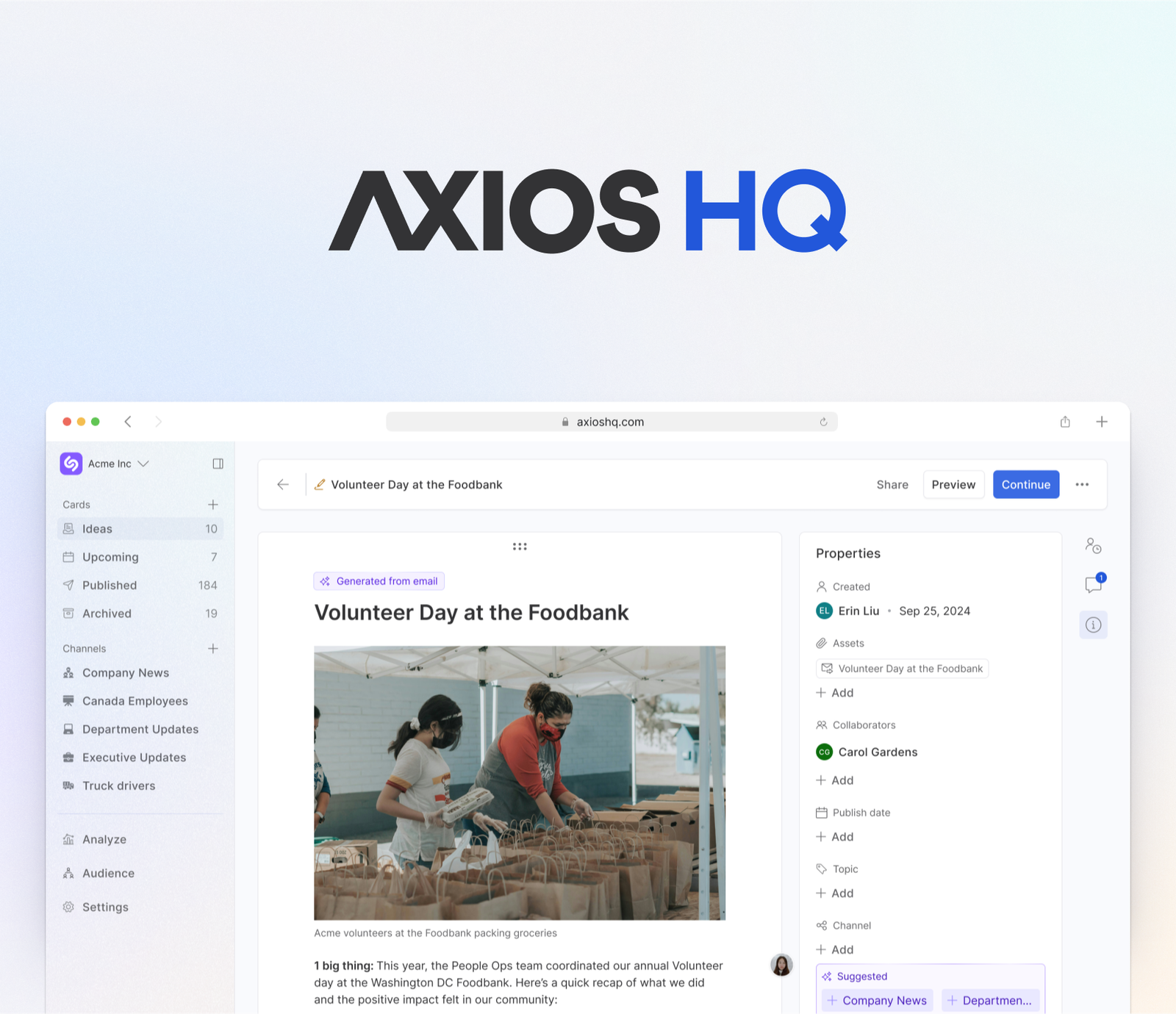
Navigation was the symptom. Axios HQ started as a focused writing tool and became a platform in waiting. Every new feature fought the old structure before it could create value. The constraint was the mental model itself.
The product no longer had a shape anyone could hold in their head, and the company was about to ask it to carry a much bigger roadmap. I rebuilt the information architecture first because planning, research, collaboration, measurement, and AI all depended on it.
v1 · 2022
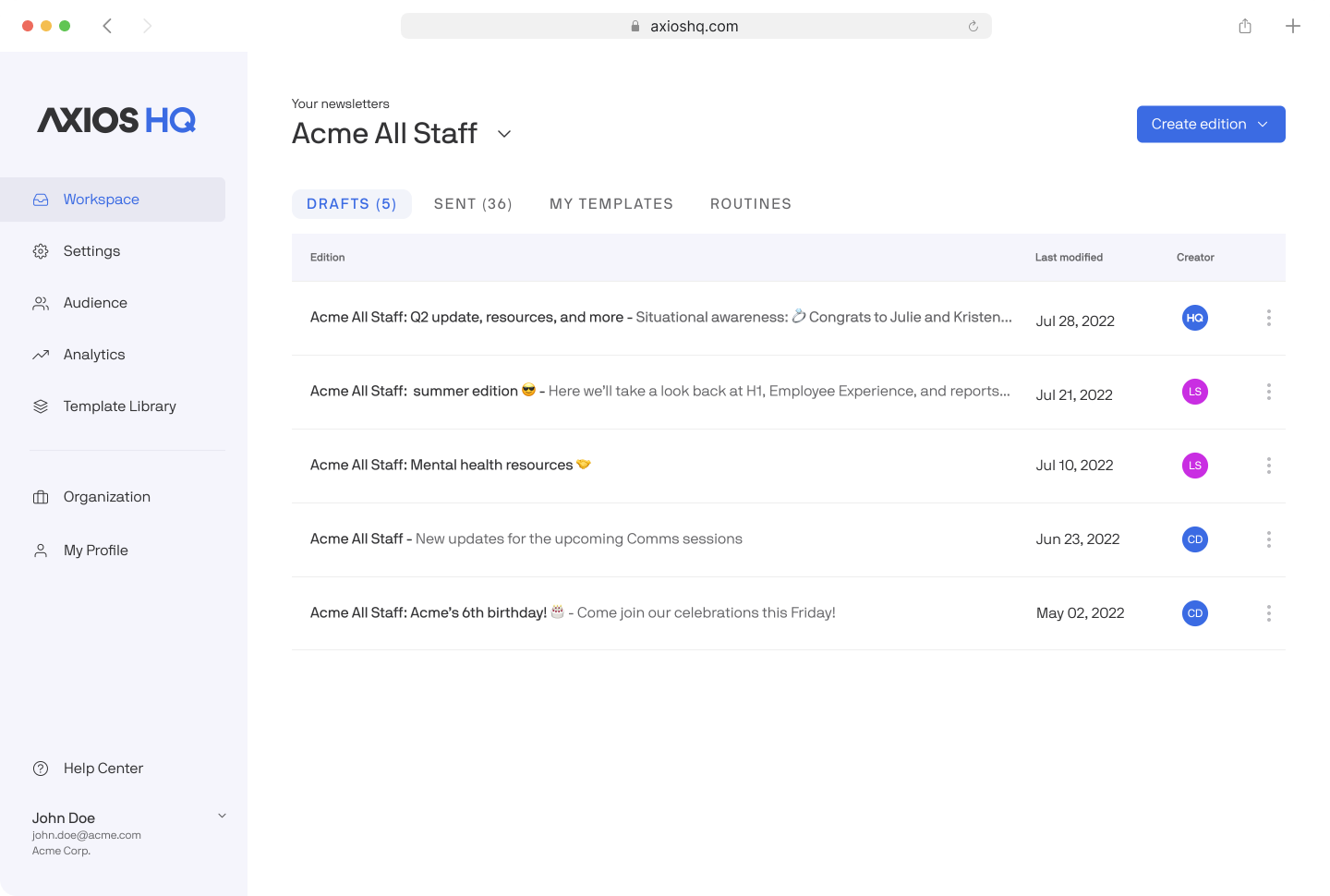
v2 · 2024
What I did
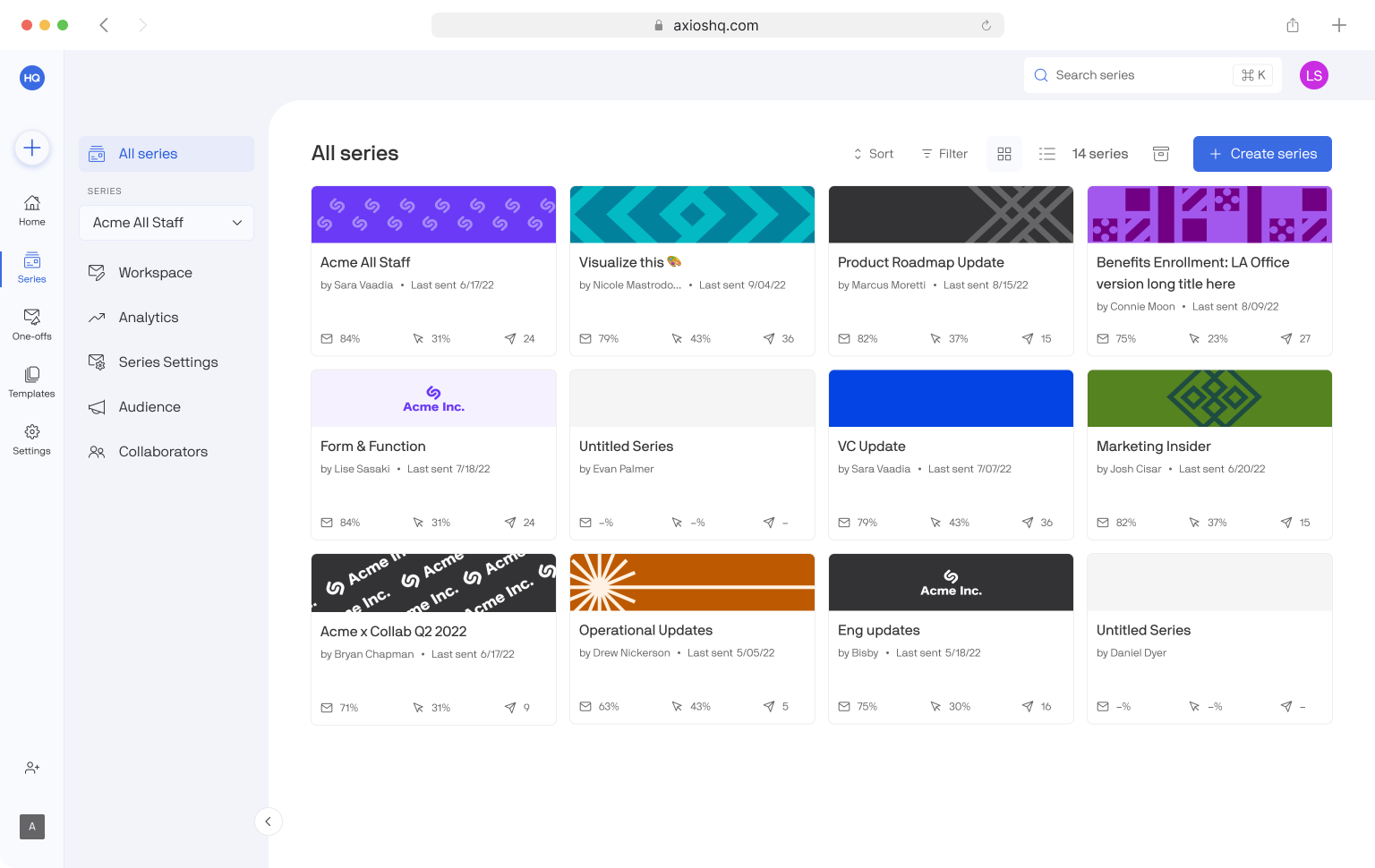
- Re-architected the product experience in the first 90 days so the AI work and feature roadmap that followed had a coherent structure to live inside, not bolted onto an app that no longer made sense.
- Chose a series-and-channels model over a folder hierarchy for the core structure. Folders were the obvious path and the one the flat newsletter list already implied, but folders model storage, not editorial intent, so every new feature had to renegotiate where it lived. Series and channels modeled the actual work and the roadmap. I made the call to restructure around the work, and the roadmap stopped fighting the structure.
- Led product, design, research, and analytics as one organization: built and matured each function in place rather than running them as separate workstreams.
- Built research infrastructure (personas, JTBD frameworks, feedback loops) as durable assets the team could draw on continuously, not one-off studies archived after a readout.
- Introduced Shape-Up-inspired planning and North Star vision framing so the team could commit to bets without losing executive visibility.
- Set the AI product strategy with the CMO and Head of AI, landing "visible versus invisible AI" as a decision rule: AI that earns user trust surfaces itself, AI that earns user time stays out of the way. Making it a rule rather than a review meant teams could resolve most AI calls themselves instead of escalating each one.
One decision system
Shared planning cadence
One product decision
Shared planning cadence
Product
Frames the decision
sets scope + success criteria
Design
Shapes the experience
translates intent into form
Research
Grounds the decision
feeds qual signal upstream
Analytics
Validates the decision
measures what shipped
AI
Woven through,
accelerates every function
Engineering
Builds the decision
ships and learns in cycle
The Strategic Frame
Visible vs. invisible AI
A two-axis decision rule for every AI surface and internal flow at Axios HQ. Show the work where the user owns the decision. Disappear where the user wants the friction gone.
Visible AI
Earns trust by surfacing the intelligence.
Where AI participates in a decision the user owns, the system shows its work and gives the user the controls to accept, edit, or reject.
01 Smart Brevity panel
Subject-line suggestions with Dismiss and Regenerate.
02 ROI dashboard actions
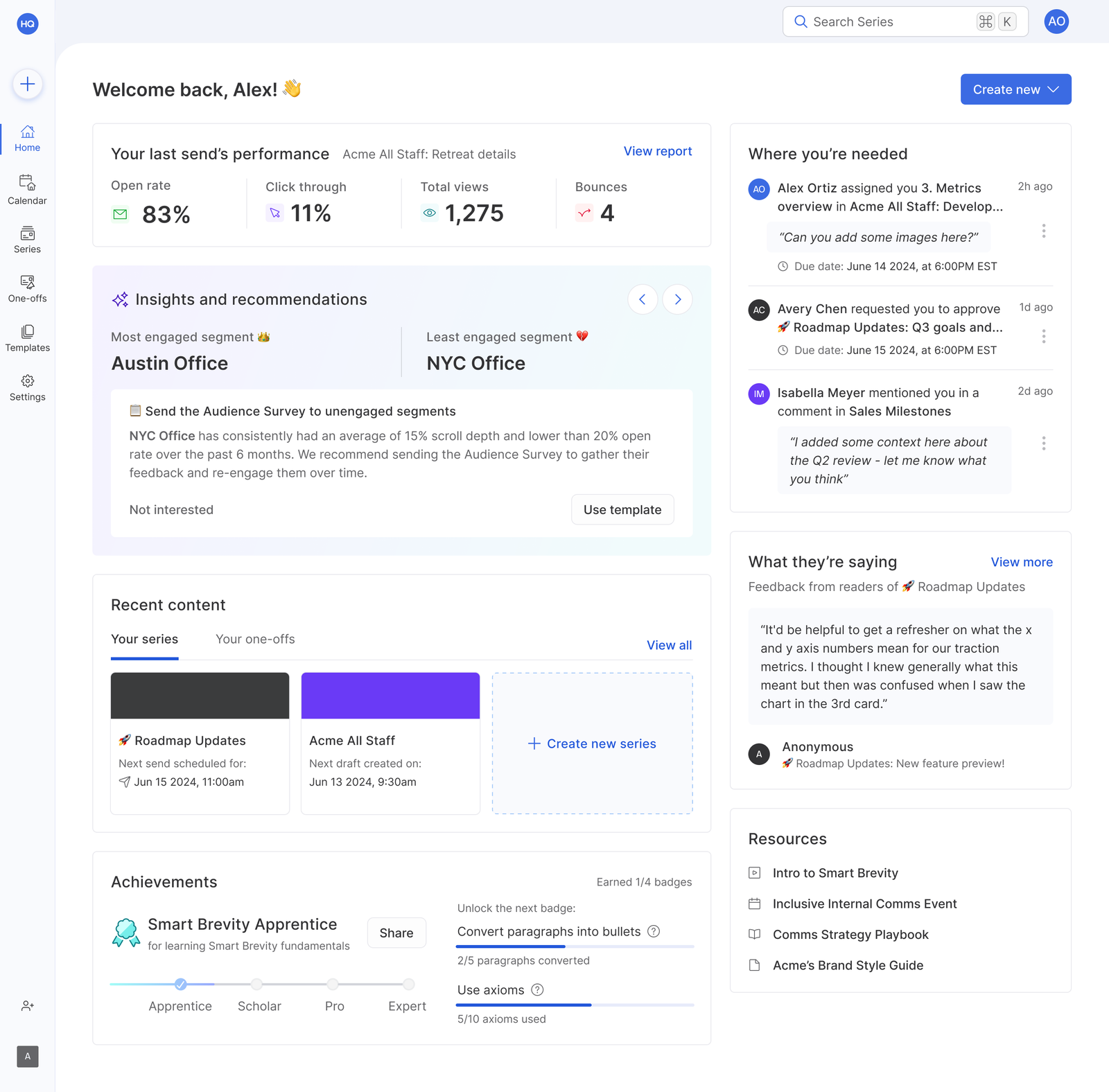
AI-suggested next steps such as "Send the Audience Survey."
03 Insights and recommendations
Surfaced under a sparkle icon so the user sees the assist.
Invisible AI
Earns time by removing the friction.
Where AI removes a step the user never wanted to take, the system performs the work in the background and leaves the override visible but quiet.
01 Editorial planning automation
Cadence work the editor never has to assemble by hand.
02 Suggested chips on metadata
Pre-filled tags in the editor metadata column.
03 Internal Zapier and custom GPTs
Background flows that absorb the team's operational overhead.
Visible AI · Smart Brevity
3 points
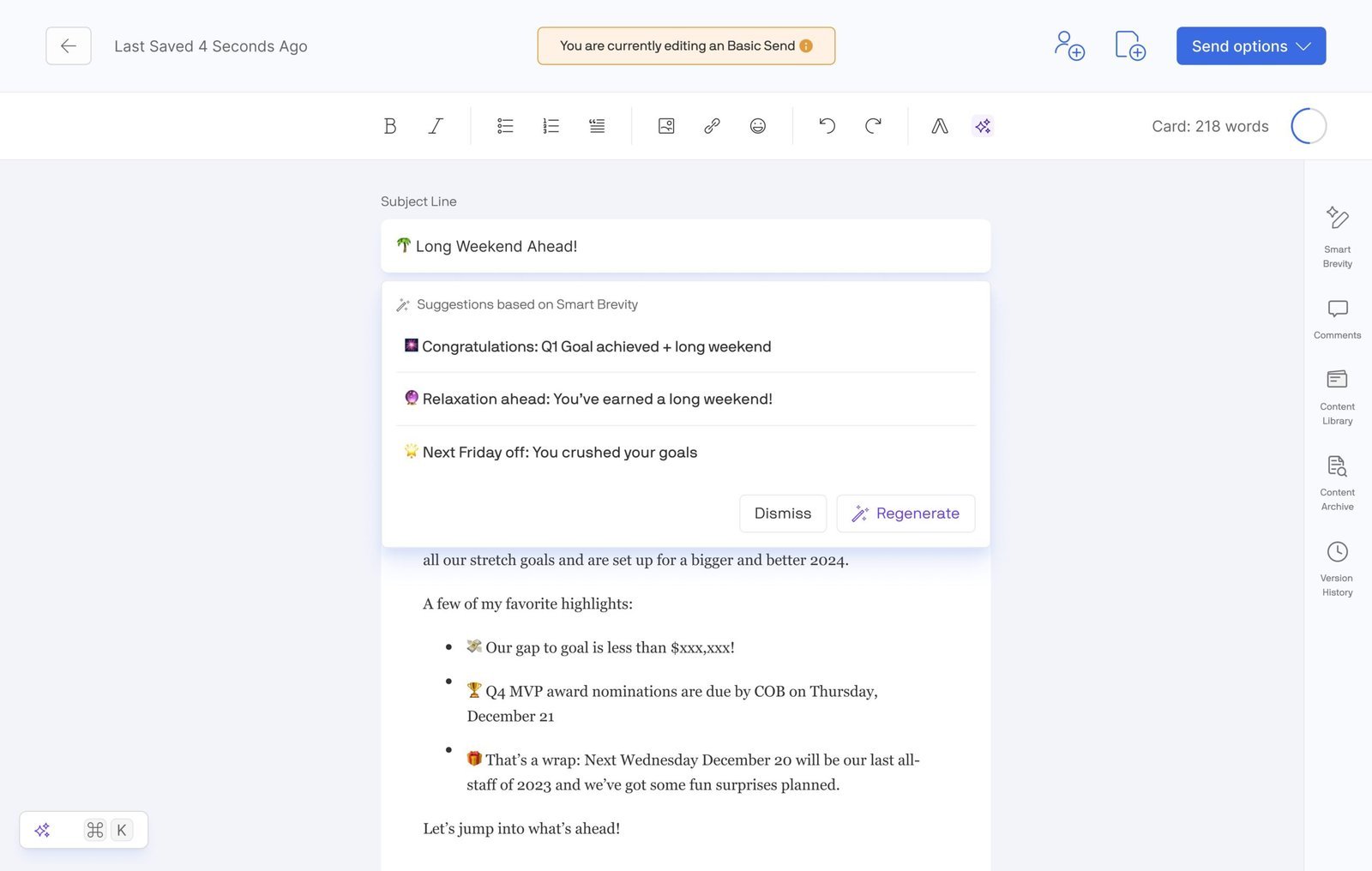
The panel offers three subject-line variants based on Smart Brevity. The model proposes options to compare, it does not silently rewrite the email.
The payoff was that AI stopped being a press release and became a product principle. The visible-versus-invisible frame guided individual product decisions without executive arbitration on each one, and platform-wide AI usage doubled. That was the structural bet paying off: the foundation was what let the AI work land as a native layer instead of a bolted-on feature.
What changed, beyond the AI number:
- Research went from reactive studies to standing infrastructure. Personas, JTBD frameworks, and feedback loops became durable assets the team drew on continuously.
- Planning became something the team owned. Shape-Up-inspired bets and North Star framing let the team commit without losing executive visibility.
Selected v3 surfaces
What the rebuild made possible.
- 01 / 03Vision Planner
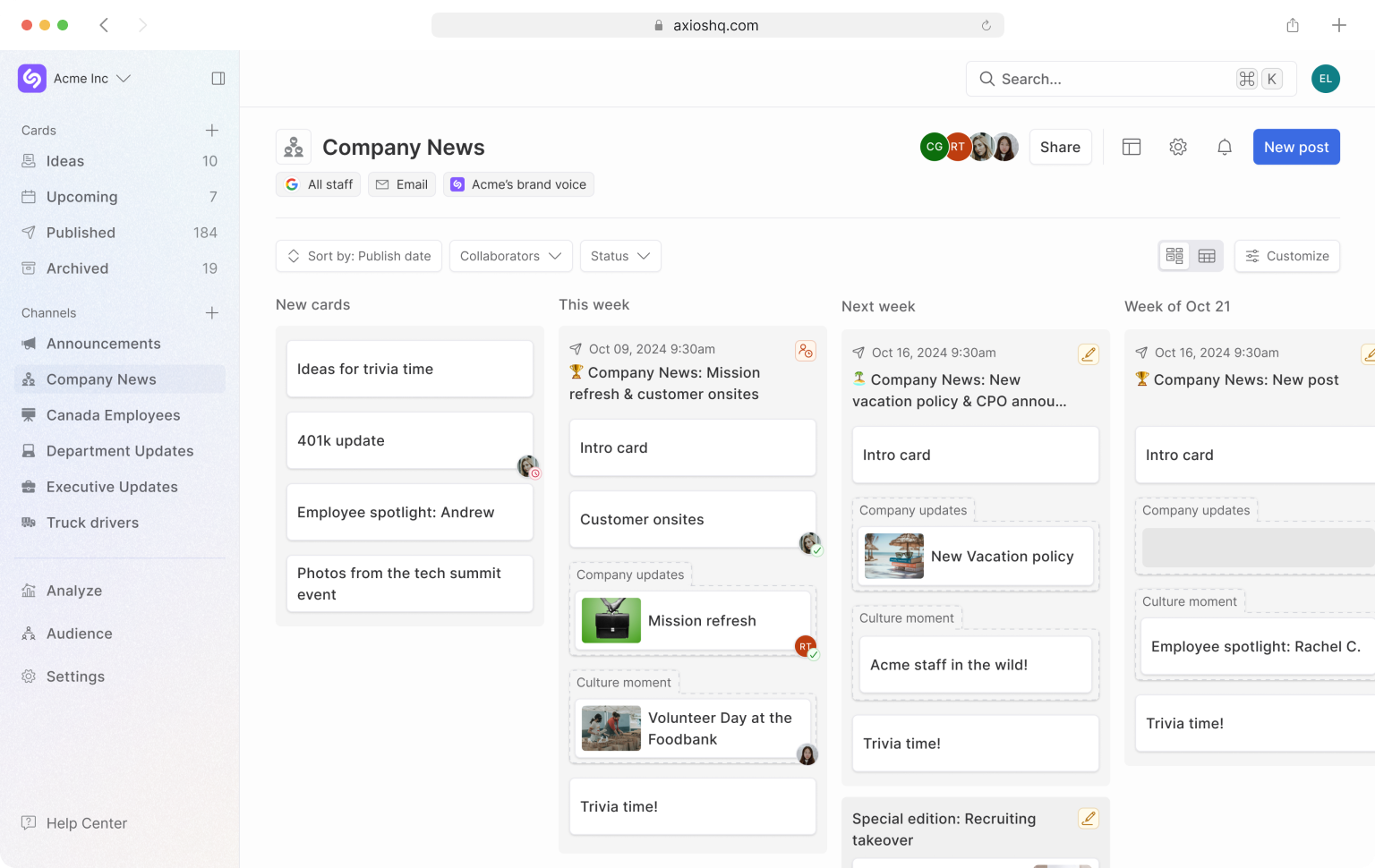
Editorial planning by week and channel. The kanban surfaces commitment, not just intent. - 02 / 03Calendar
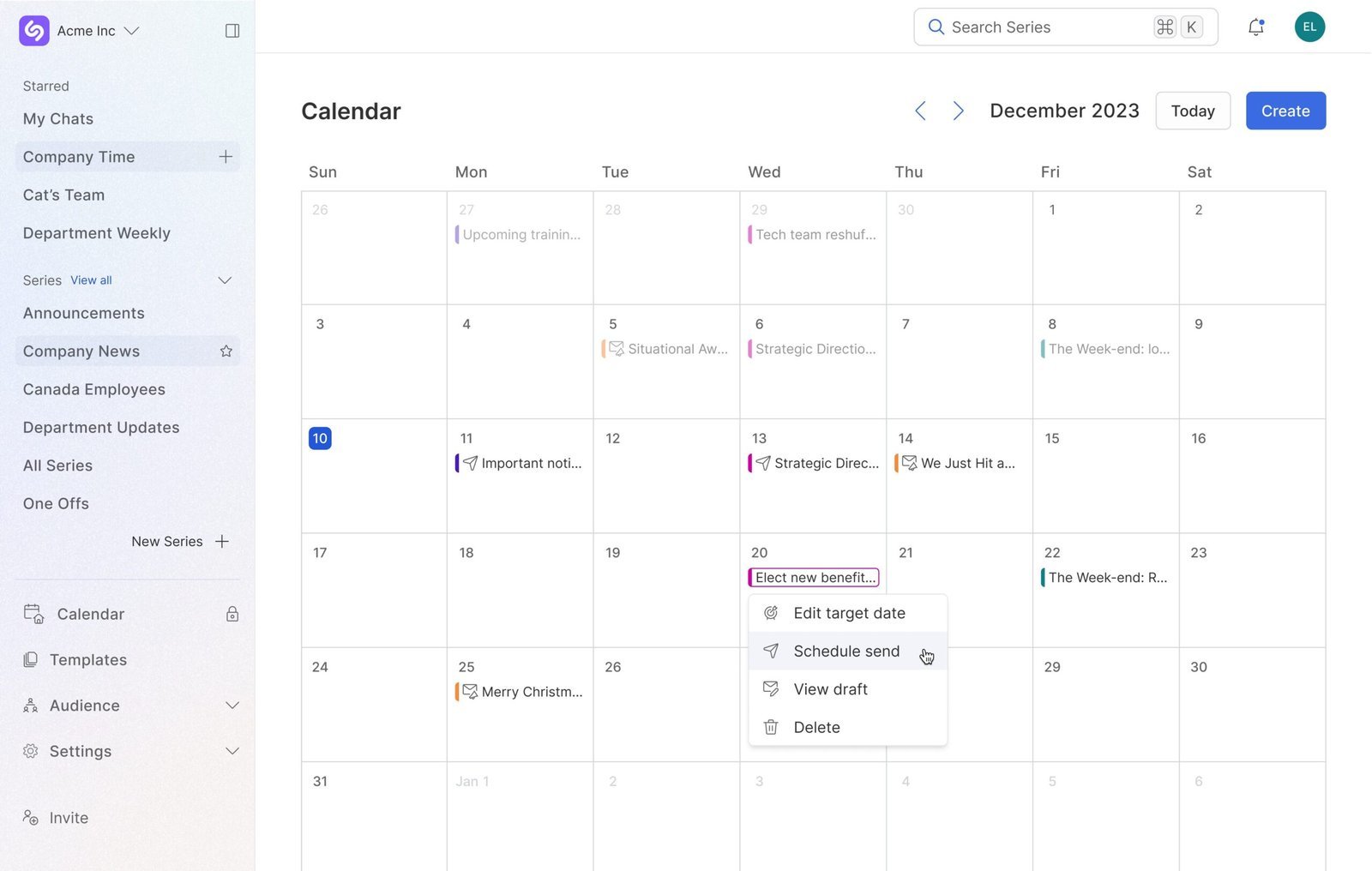
The calendar reads as a budget, not an inbox. Send timing and target dates live in one place, so editors plan capacity instead of chasing deadlines. - 03 / 03Collaboration
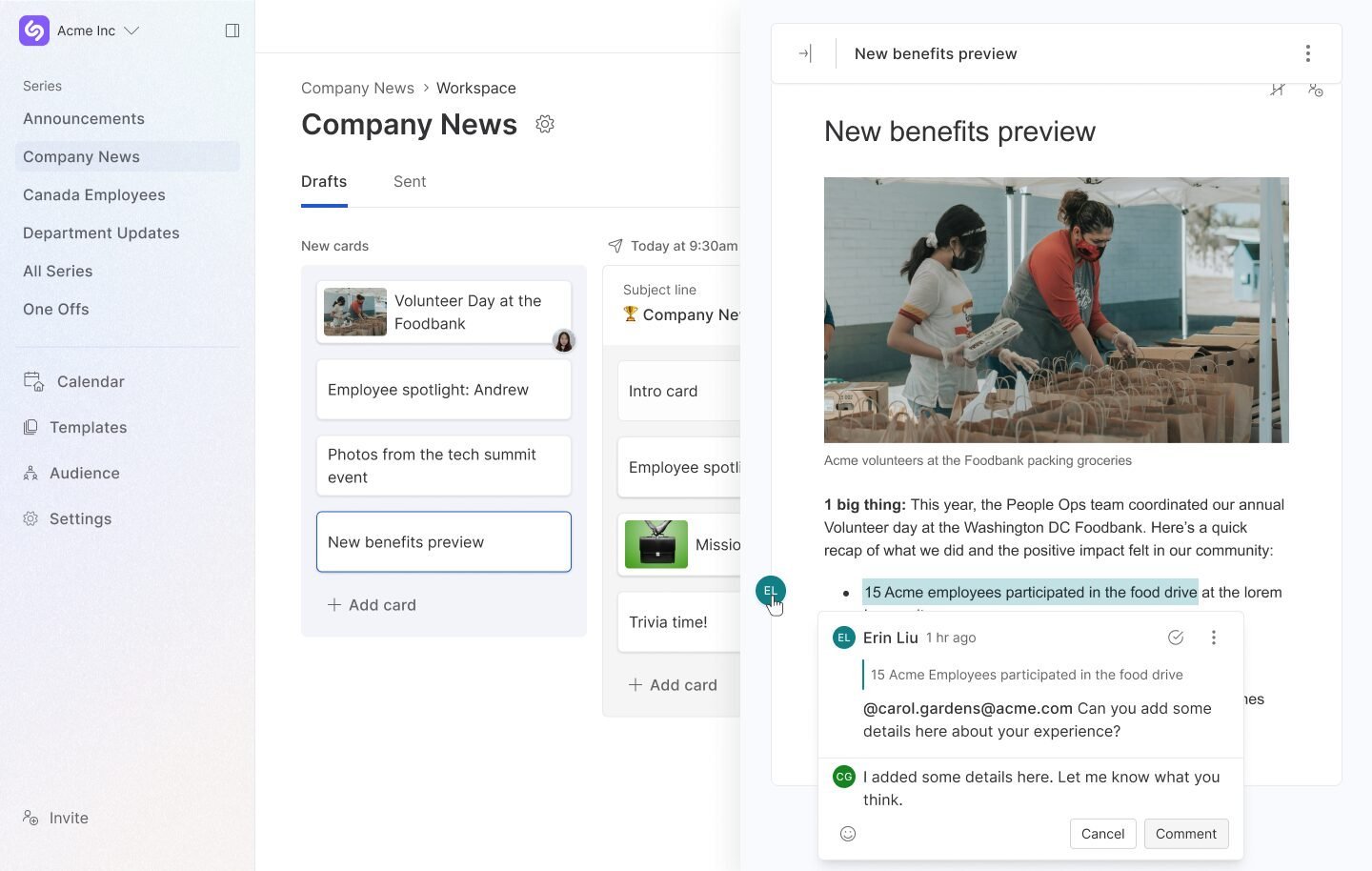
Feedback happens where the work lives. Inline threads sit on the highlight itself, and mentions route the question straight to the right teammate.
AI usage across the platform
Platform-wide.
Reflection
1. Pull research before the first architecture pass, not after. I committed the first IA cut partly on gut, then reworked decisions once the mental-model research caught up. Starting from user mental models would have sharpened that first pass and saved the downstream iteration. That is the honest cost of moving fast on structure. 2. A decision rule scaled better than a decision review. Turning "visible versus invisible AI" into a rule teams could apply themselves, instead of a call I arbitrated case by case, is what let the AI work move without me in the middle of every judgment. It is the lever I would reach for first on the next platform.